


Logistics relies on documentation rather than just handshakes. Goods can be packed, palletized, and secured, but they do not enter the legal transport system until a carrier issues a waybill. Waybill Meaning: This essential record defines the contents and the destination.
Most managers ignore this paperwork until a disruption occurs. A truck showing up at the wrong facility or a shipment stuck at a border usually traces back to a data error on the waybill. Waybill Meaning refers to the simple document that accompanies the freight from start to finish, telling each handler where the cargo needs to go next.
What Is a Waybill
Waybill Meaning is the basic routing record for freight, making sure each pallet and parcel can move to its destination under the right terms. Waybill Meaning: the written record of what is being shipped and where it is headed, helping the supply chain keep moving without unnecessary stops.
Function
Waybill Meaning starts with its role as the main transport record that a carrier issues after goods are taken in for shipment. This document, in paper or digital form, lists the three details that matter for every load: the sender, the receiver, and the cargo itself. Waybill Meaning is found in the working instructions used across the shipping chain. Airlines, trucking fleets, and ocean carriers rely on it to move freight. Warehouse teams check it before releasing inventory, and customs officials refer to it when deciding whether a container can pass a border.
Non-Negotiable
One distinct characteristic sets the waybill apart from other maritime or trade documents: it is non-negotiable. This means it does not function as a document of title. It does not prove ownership, it cannot be traded or sold while the goods are in transit, and it does not dictate the terms of payment between a buyer and a seller. Its sole purpose is to confirm a carriage agreement, proving that a transportation company has committed to moving specific inventory from one location to another.
When it is used
This straightforward nature makes waybills ideal for high-trust supply chains where speed is a priority. They are the standard choice for factories sending weekly replenishments to established distributors or e-commerce companies shipping directly to their customers. They are also used for internal inventory transfers between a company’s own regional warehouses. In these scenarios, the system already recognizes the parties involved, so no one has to wait for original title paperwork to arrive before releasing the cargo.
Common Types of Waybills
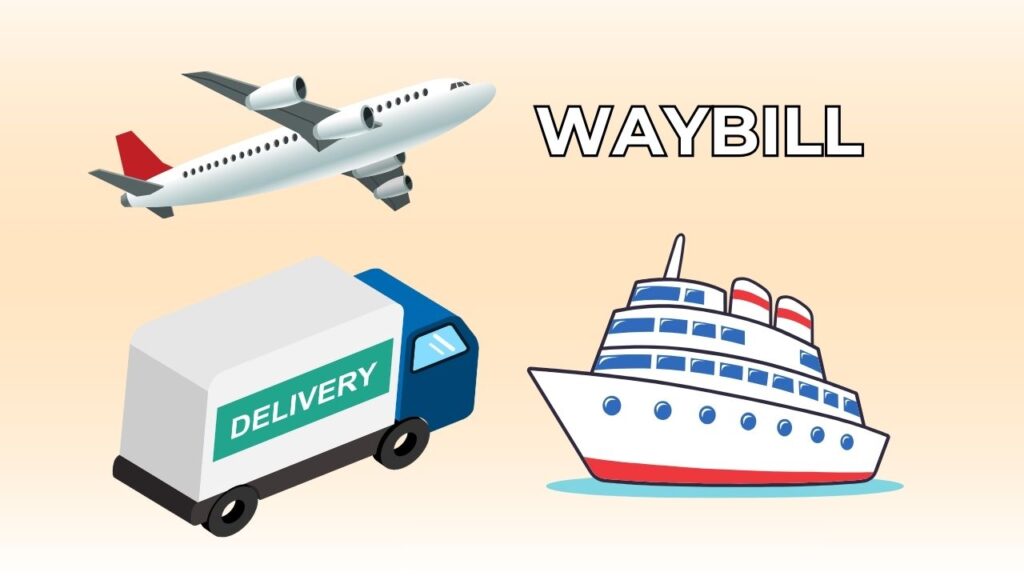
The format changes depending on how the freight travels. The purpose stays the same.
Air Waybill
Air cargo moves fast and gets scanned constantly. The Air Waybill, usually called an AWB, keeps that movement organized. Airlines issue one master AWB for a consolidated shipment. Freight forwarders issue house AWBs for each client shipment inside that consolidation.
The master sits with the airline. The house version connects the shipment to the actual shipper and consignee. That is the number that shows up in tracking systems and customer portals. Air freight runs on this structure. Without it, nothing is clear.
Sea Waybill
Ocean freight uses something that looks like a bill of lading but works nothing like one. The Sea Waybill does not need original copies. No couriered paperwork. No waiting for documents to cross borders.
Once a vessel arrives and customs clears the container, the carrier releases the cargo to the named consignee. That saves days, sometimes weeks. It only works when the buyer and seller already know each other.
Road and Rail Waybills
Trucks and trains use transport notes that serve the same role. In Europe, that document is called a CMR. Rail operators use their own versions. These documents track liability and delivery across borders and terminals. They keep freight from becoming anonymous.
Waybill vs Bill of Lading
Many first-time shippers struggle to distinguish between these two vital documents. While they may appear similar, their legal functions dictate entirely different handling procedures for your freight.
Ownership
A bill of lading functions as a document of title, meaning it serves as official proof of who owns the cargo. Banks often use it as collateral, and traders can actually sell the goods while they are still at sea by transferring this document. In contrast, a waybill is merely a contract of carriage. It carries no weight regarding ownership and simply instructs the carrier on where to deliver the items.
Negotiability
Because a bill of lading represents the value of the goods, it is a negotiable instrument. It can be endorsed and passed between parties to change who has the right to the cargo. A waybill is strictly non-negotiable. It is addressed to a specific recipient and cannot be traded or assigned to anyone else during the journey.
Cargo Release
This distinction directly impacts your delivery speed. Under a bill of lading, containers stay locked at the port until the original physical paperwork is presented. A waybill allows for a much faster “express release.” Since it does not control the title, the carrier can hand over the goods to the named recipient as soon as they arrive and clear customs, supporting a faster overall supply chain.
What Information a Waybill Carries
Even though the requirements look simple, the quality of the data sent to a carrier decides whether a shipment moves on schedule or stops at the first inspection point. Small differences in those details often turn into delays and added charges.
- Shipper and Consignee Details: Full names and physical addresses for both the sender and the recipient.
- Geographic Data: The specific origin point and the final destination to map the transit route.
- Cargo Description: A clear, detailed explanation of exactly what items are inside the containers.
- Physical Metrics: Precise weight measurements and the specific type of packaging used, such as pallets or crates.
- Identification Numbers: The tracking code or Air Waybill (AWB) number used for system monitoring.
A single error, like an incorrect postal code or a weight mismatch, is enough to halt a shipment indefinitely.
How NextSmartShip Handles Waybills
Earlier, paper-based documentation slowed down fulfillment centers. Staff had to type order details into different carrier systems, print labels one by one, and review each line for mistakes. That routine invited errors and often held shipments back.
NextSmartShip has eliminated these operational hurdles through direct integration. When an order enters the platform, existing inventory data automatically populates the required shipping fields. The system selects the carrier and produces the correct waybill format on its own. Air cargo receives an AWB, ocean freight is assigned a sea waybill, and parcel shipments get the right courier label.

Since all shipment details come straight from the order and inventory records, billing issues and customs holds become far less common. The numbers line up, the descriptions stay consistent, and fewer shipments fall into review.
That leads to steadier movement through the network, with fewer delays tied to missing or incorrect paperwork. Taking manual document handling out of the process, NextSmartShip keeps goods moving with less friction and fewer interruptions.
Conclusion
Waybill Meaning is maintaining transparency, legal compliance, and constant motion for your freight. It avoids the complexities of ownership or payment, acting purely as a directive for every handler regarding the shipment’s contents and destination. Selecting the incorrect paperwork inevitably stalls the entire chain, while the right document ensures a smooth transition between borders. NextSmartShip manages this administrative layer automatically. Every parcel or pallet departs with precise documentation, allowing your operations to run without the delays caused by manual filing errors.