


Huge trucks arrive at the dock with the goods inside, but the products often stay hidden from the website for many days while buyers wait for news today. The real slow spot is almost always the warehouse receiving team because the items are physically in the building, but cannot be sold yet.
This work covers the unloading and checking of every box so that the stock officially enters the digital shop for good. This guide looks at the back-door steps that matter most and shows how to fix the stalls that stop a brand from moving fast and making money.
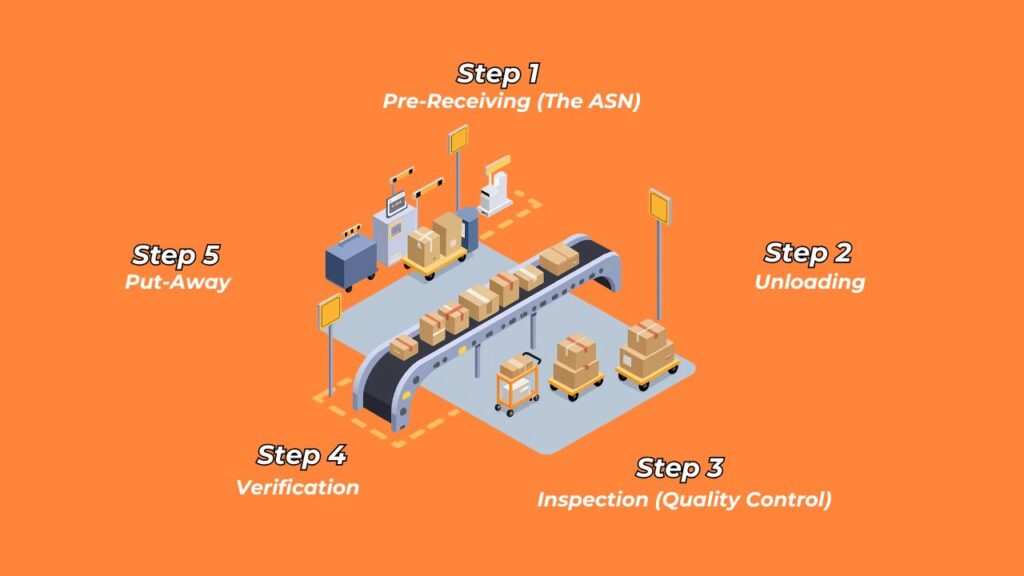
The 5-Step Warehouse Receiving Process
Every warehouse back door follows the same basic routine, but the real gap between a fast shop and a failing one comes down to how well the crew handles the details on the floor today.
Step 1: Pre-Receiving (The ASN)
The work starts long before the driver pulls the brake at the dock because the warehouse needs a heads-up known as an Advance Shipping Notice or a Warehouse Receiving Order. This digital sheet tells the team exactly what is coming so they aren’t surprised when the doors open.
- The Essentials: The document lists the specific items, the total box counts, and how everything is stacked on the pallets.
- Timing: Knowing the arrival date helps the manager schedule enough hands to move the heavy load quickly. Without this notice, the warehouse is flying blind, and the crew won’t have the space or the time cleared to get the goods inside.
Step 2: Unloading
Unloading is the physical act of moving the pallets or boxes off the trailer and onto the concrete floor of the dock. While it looks like simple labor, doing it wrong can lead to broken products or a massive pile-up that blocks the rest of the building. Efficient teams clear the truck fast so the driver can get back on the road and the dock stays open for the next delivery.
Step 3: Inspection (Quality Control)
This step is the only chance to catch mistakes or damage before the goods become the warehouse’s responsibility. Shipping over long distances often results in crushed corners or wet boxes that shouldn’t be sold to a buyer.
- Eyes on the Load: The team looks for broken seals, holes in the boxes, or signs that the items have shifted too much during the trip. Finding these problems early saves the brand from the headache of sending broken gear to a customer later on.
Step 4: Verification
This is the moment where the actual count is checked against the paperwork to make sure every paid-for item is present. If the list says a thousand units are inside but only nine hundred show up, the team has to flag that gap immediately to keep the books straight for good. Skipping this count creates phantom stock that shows up on the website but doesn’t actually exist on the shelf.
Step 5: Put-Away
The final move involves taking the verified boxes from the dock and putting them into their permanent homes on the racks. Until this step is done, the items stay invisible to the shipping system and cannot be picked for an order. Fast put-away is the only way to shorten the time between a truck arriving and a new sale happening online.
Common Receiving Nightmares and How to Avoid Them
The same headaches tend to happen at every loading dock across the industry because small mistakes at the factory turn into major stalls once the truck doors open today.
The Mystery Box
The most common trap is the arrival of plain brown boxes that have no labels, no part numbers, and no marks to show what is hidden inside the cardboard. Because the crew cannot guess what is in the shipment, these cartons usually get shoved into a corner or a “problem pile” where they sit for weeks while the warehouse manager tries to track down the owner.
Putting clear, scannable labels on every single box before they leave the supplier is the only way to stop this from killing the warehouse schedule for good.
Non-Compliant Pallets
Trouble hits when vendors cut corners by using cracked wood or pallets that won’t fit the high racks in the warehouse. The whole intake operation grinds to a halt because the crew must restack every single box onto a solid, standard pallet before the items can move.
This manual swapping kills hours of precious time and leaves the loading bay jammed with frustrated drivers waiting outside for their turn to empty the trailer.
The Solution: Inbound Routing Guides
The smartest move to end these headaches is to hand every supplier a strict rulebook known as a routing guide that spells out exactly how the freight should arrive at the back door. These rules lay out the specific pallet sizes, where to slap the labels, and how to wrap the gear so it stays safe in the trailer.
Once a vendor realizes that breaking these rules leads to long waits or stiff fines, they usually get the paperwork and the packing right, which lets the crew move the goods from the dock to the racks without hitting any snags.
Best Practices for Faster Warehouse Receiving
Making small shifts in how goods arrive at the back door can drastically cut down the time it takes to get products onto the digital shelf today.
Label Every Unit
Scannable codes keep the whole building moving fast, so every single item needs a crisp sticker tied to its part number before it ever crosses the threshold for good.
Forcing the crew to guess what a product is by squinting at a photo or a messy handwritten note kills the pace of the line and creates expensive errors that ruin the books for months today. Sticking with clear labels means the team can simply zap each box and move it to the racks without having to freeze and ask for help during the afternoon rush.
Floor Loaded vs Palletized Shipments
Squeezing loose boxes into every inch of a shipping container saves money on the boat, but it creates a massive labor bill because the crew has to unload every carton by hand once the truck hits the dock.
Palletized shipments move much faster because a forklift can clear a whole trailer in minutes, getting the stock into the system and ready for sale almost immediately. Brands have to decide if the lower freight cost of a packed container is worth the long delays and extra labor hours required to empty the truck one box at a time.
Kitting on Arrival
Putting bundles together during the first check means the boxes sit on the shelf ready to ship, which saves the picking team from a massive headache when the afternoon orders start pouring in.
Setting this rule early stops the mess from piling up in the corner and makes sure the warehouse keeps moving with a clear plan from the first bell of the shift.
How NextSmartShip Handles Warehouse Receiving
The way the back door of a warehouse is managed sets the pace for everything else, and NextSmartShip treats this first step as the most important part of the entire day-to-day.
24-Hour Receiving SLA
The team pushes to empty the trailer and move every item onto the warehouse racks within a day of the truck leaving the loading bay today.
- Closing the Gap: Moving fast means that items go from a shipping container to the digital shop floor in a single day.
- Ready to Sell: This speed ensures that marketing plans stay on track and buyers never have to wait through long, silent delays for new stock to appear.
Strict Quality Control
Every piece of inventory goes through a hard look as it comes inside to catch any trouble before the items ever reach a buyer’s porch.
- Catching the Cracks: Finding wet boxes or broken seals at the dock stops bad products from getting mixed in with the good stock.
- Saving the Sale: Flagging these issues early prevents the headache of dealing with angry emails and expensive return shipping later on.
Real-Time Dashboard Updates
The second the crew finishes putting the boxes into their permanent spots, the system pushes the new numbers live to the merchant’s screen.
- Hard Facts: This instant update means a brand knows exactly what they have on hand without having to guess or make a phone call.
- Clear Sight: Having this level of visibility takes the stress out of planning for big sales rushes or holiday orders.
Trust the NextSmartShip crew to get the goods moving and keep the numbers clean from the very first minute.

Conclusion
The speed of the back door determines how fast a brand can turn a heavy shipping container into real money today. A brand cannot move a single box until the back-door crew puts it on the books, so every step from the first heads-up to the final shelf spot must guard the count and flow of the goods today. When this work hits a snag, the whole company feels the pressure as customer orders begin to sit still for too long. Following the rules for labels and pallets builds the trust needed to keep a shipping partnership moving fast from the very first minute.