


The first major logistics decision that many ecommerce sellers face is relatively easy to answer on the surface: Dropship or keep inventory and rely on a fulfillment process?
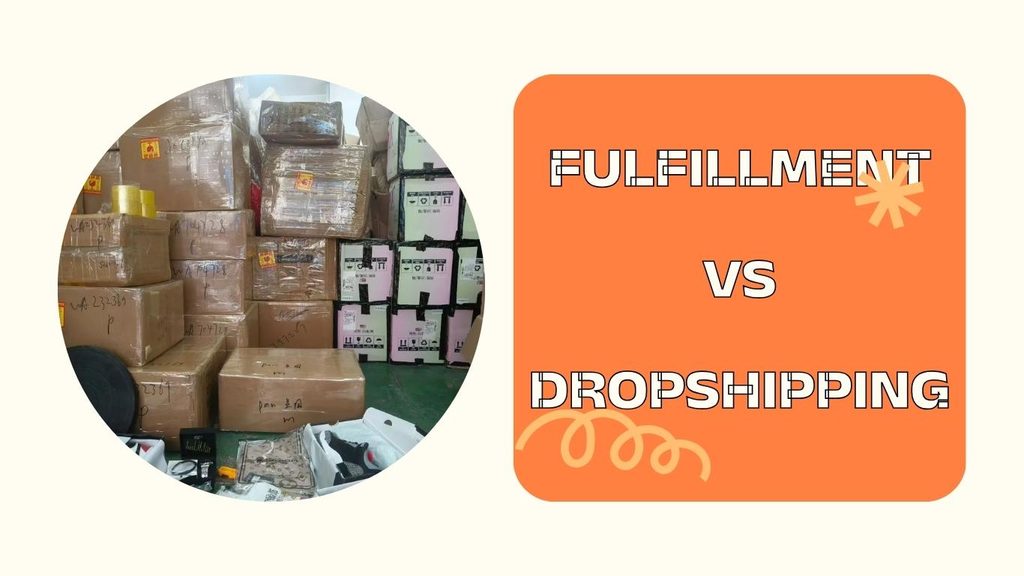
Both models can deliver the products to the customers. Both can cut down on the requirement to perform your own storage facility. They operate in very different ways, however, behind the scenes.
Dropshipping typically involves selling products without having to store any yourself. The supplier will directly send the product to the customer when a customer places an order. Traditional ecommerce fulfillment typically involves the following: You purchase or manufacture products, keep them in your own fulfillment center or warehouse, and order fulfillment comes from your inventory.
The distinction impacts virtually everything, from delivery velocity to product quality and packaging, customer experience, profit margin, inventory danger, and brand management.
Dropshipping can be a risk-free means of product testing for a new seller. With an expanding DTC (direct-to-consumer) brand, fulfillment typically leads to more control and a superior customer experience. The decision is dependent upon the current stage of your enterprise and the brand you’re looking to establish.
Fulfillment vs Dropshipping at a Glance
The easiest way to understand the difference is to look at who owns the inventory and who controls the customer experience.
| Area | Dropshipping | Ecommerce Fulfillment |
| Inventory ownership | Usually supplier-owned until sold | Brand-owned inventory |
| Upfront cost | Lower | Higher |
| Warehouse storage | Supplier handles storage | Brand or 3PL stores inventory |
| Shipping control | Limited | Stronger |
| Packaging control | Often limited | Stronger branding options |
| Quality control | Harder before shipment | Easier before inventory goes live |
| Delivery speed | Depends on the supplier and route | Can be faster with local or hybrid fulfillment |
| Profit margin | Often lower | Often stronger if managed well |
| Best for | Testing products and low-risk entry | Building a scalable brand |
Neither model is perfect. Dropshipping reduces upfront inventory risk, but it usually gives the seller less control. Fulfillment requires more planning and capital, but it gives the brand more control over stock, shipping, packaging, and customer experience.
What Dropshipping Really Means
According to Shopify’s dropshipping guide, dropshipping allows a seller to sell products without keeping inventory, while a third-party supplier ships the product directly to the customer.
A simple dropshipping process looks like this:
- A seller lists a product online.
- A customer places an order.
- The seller sends the order to a supplier.
- The supplier picks, packs, and ships the product.
- The customer receives the order.
This model has a very appealing aspect in that it reduces the entry costs. The seller can open a store without paying hundreds or thousands of dollars upfront! This can be beneficial for product tests, initial experiments, or for those who do not have a lot of money to play with.
But it is the same advantage that is the principal drawback. Because the seller does not control inventory, warehouse handling, packaging, or shipping, the customer experience depends heavily on the supplier.
The customer even holds the seller responsible if the supplier does not have the stock in inventory, sends it late, packs it badly or sends the wrong item.
While dropshipping can be effective, it becomes more challenging when the dropshipper desires to establish a reputable brand that offers consistent product quality, quick turnaround, and enhanced packaging.
What E-commerce Fulfillment Means
E-commerce fulfillment involves receiving inventory, storing it, processing orders, picking and packing parcels, shipping them out, and informing customers of the tracking details.
Shopify’s guidance on fulfilling orders also shows that sellers can handle fulfillment themselves, use a fulfillment service, or combine different fulfillment methods depending on how their business operates.
There are a number of different ways for a seller to satisfy orders. Some companies self-fulfill from a mini storage room. Others employ a third-party logistics company (3PL) to hold stock and fulfill orders for them. Some manufacturers opt for a hybrid approach with some stocks in China and best sellers in warehouses in the US or Europe.
The fulfillment process usually looks like this:
- The brand buys or produces inventory.
- Inventory is sent to a warehouse or fulfillment center.
- Orders sync from the store or marketplace.
- The warehouse picks and packs each order.
- Tracking is sent back to the seller and customer.
- Inventory updates after the order ships.
Fulfillment provides the seller with greater levels of control than dropshipping. The brand can check the inventory prior to selling, enhance packaging, keep the products nearer to the customers, bundle products, use branded inserts, and deal with returns more professionally.
The downside is that fulfillment comes with the price of inventory investment. It is the seller’s decision what product to order, what quantities and how to store the product.
The Biggest Differences That Matter
The dissimilarities between fulfillment and dropshipping aren’t just operational. They affect the seller’s wider business strategy.
Inventory control: Dropshipping is dependent on supplier inventory. The benefit of fulfillment is that the brand gets more visibility and control of inventory.
Shipping speed: Dropshipping speed is dependent upon the shipping approach and the location of the supplier’s warehouse. The closer the inventory is to the customer, the quicker fulfillment can be, so to speak.
Branding: Dropshipping often limits packaging control. Branded Packaging, inserts, kitting, and Bundles are easier with Fulfillment.
Quality control: Dropshipped products can be sent from the supplier to the customer without being seen by the seller. Fulfilled stock can be audited, labeled and ready for sale.
Customer service: If there’s a problem with the dropshipping operation, the seller will have to wait for the supplier to react. The seller/3PL has a more direct view of inventory and shipping status with fulfillment.
Cash flow: Dropshipping has a lower start-up capital demand. Fulfillment can help improve margin and customer experience if there is a predictable demand but it comes at a cost of tying up money in inventory.
Scalability: Dropshipping is simple to get going, yet it may be more difficult to manage on a larger scale. Fulfillment requires more setup but is typically more robust for a long-term brand.
This is why many sellers start with dropshipping, then move toward fulfillment once a product proves demand.
When Dropshipping Makes Sense
Dropshipping can be a good option when the seller is still testing the market.
It may work well if:
- You are validating a new product idea.
- You have limited startup capital.
- You do not know which SKUs will sell.
- You want to avoid buying bulk inventory too early.
- You are testing different niches or product categories.
- You can accept longer or less predictable shipping times.
Dropshipping can be particularly helpful with the learning aspect. Sellers can verify product demands, ad angles, price points and audience responses prior to inventory commitment.
However, there are things that sellers need to be careful about when it comes to promises for customers. Should the shipping time be extended, it should be clearly indicated. If the supplier is unable to deliver in a short period of time, the seller shouldn’t talk about rapid delivery.
For orders placed online that are received in the U.S., the Federal Trade Commission requires sellers to have a reasonable basis for shipping promises. If a seller cannot ship within the promised time, or within a reasonable time when no shipping time is stated, customers should usually be notified and given the appropriate option to accept the delay or cancel for a refund.
This is why supplier reliability is crucial. The relationship with the customer remains with the dropshipper, even if another company ships the product.
When Fulfillment Is the Better Choice
Fulfillment becomes stronger once a product has proven demand.
It may be the better choice if:
- You know which products sell consistently.
- You want better control over shipping speed.
- You need branded packaging or inserts.
- You want to improve product quality checks.
- You are selling through multiple channels.
- You want to reduce supplier-related delays.
- You need better inventory and tracking visibility.
- You want to build a recognizable DTC brand.
The main advantage is control. The brand with the inventory can determine where that stock should reside, how it should be packaged, what shipping methods it can provide and what the return process should be.
For instance, a brand that imports products from China can maintain the presence of new or under-selling SKUs in China and move popular items to a US warehouse. This way, the brand can enjoy quicker delivery of products in high demand without having to keep all of the SKUs in the country.
Packaging is also made easier with fulfillment. Brands can take advantage of custom boxes, branded inserts, bundles, instruction cards and protection materials. This is important for DTC brands because the delivery experience is a part of the product experience.
Dropshipping, Fulfillment, or Hybrid Fulfillment?
One model for all times is not always the best option. There are several phases for many e-commerce brands.
Dropshipping can be used to test the demand in the initial stages. Control can be improved with fulfillment once the seller has found a winning product. Hybrid fulfillment can be used to balance cost and speed across multiple markets and is an option available later.
A common growth path looks like this:
| Stage | Best Model | Reason |
| Product testing | Dropshipping | Low upfront inventory risk |
| Early traction | China fulfillment | Better control while staying near suppliers |
| Proven demand | 3PL fulfillment | More reliable order handling and packaging |
| Strong regional demand | Hybrid fulfillment | Faster delivery in key markets |
| Mature brand | Multi-location fulfillment | Better speed, resilience, and inventory placement |
This step-by-step action will help you avoid committing too much, too soon. Sellers shouldn’t necessarily ship each item to a US warehouse before they know what sells. Simultaneously, the owner shouldn’t continue to take a basic dropshipping approach once the need grows and the prospect of much better fulfillment appears.
The right model should follow product performance.
Mistakes to Avoid When Choosing a Model
The biggest mistake is choosing only based on startup cost. Dropshipping may appear less costly because there is no bulk purchase of stock, but the quality control can be poor, the shipping time is not quick, the branding is not good, and refunds can be negative.
Another error is moving into fulfillment too early. When purchasing inventory before it has been established, cash can get locked up in inventory that fails to sell.
Sellers should not only depend on one supplier but should also look into having alternate suppliers. If the supplier’s stock is depleted or the price changes, there’s nothing the seller can do about it.
The other risk is poor communication. No matter whether you’re dropshipping or using fulfillment, make sure to provide your customers with clear delivery time estimates and updates.
Lastly, sellers shouldn’t employ the same model for each SKU. Different products may require different methods of fulfillment, such as best sellers, test products, slow movers, fragile products, and high-margin products.
Where NextSmartShip Fits in a Post-Dropshipping Strategy
Many ecommerce brands start with dropshipping because it gives them a flexible way to test products before purchasing inventory in bulk. But once sales become more consistent, basic dropshipping can start to limit control over packaging, shipping time, inventory visibility, and customer experience.
NextSmartShip can support sellers that want a more structured option through its dropshipping fulfillment service. This can help brands keep testing products while improving order handling and fulfillment visibility compared with a basic supplier-shipped setup.
After a product begins to sell consistently, the next step is usually to build a more dependable fulfillment process. At that stage, sellers may want to hold inventory, prepare products in advance, improve packaging, and reduce the risk of supplier-related delays.
NextSmartShip’s e-commerce fulfillment services can support brands that are ready to move from simple product testing toward a more organized fulfillment workflow. This can include inventory storage, order processing, packing, shipping, and tracking support for sellers who want more control over the customer experience.
This is especially useful for brands sourcing products from China. A seller can test new products through a flexible China-based setup, keep proven products in a fulfillment center, and move stronger sellers closer to customers when demand becomes more predictable.
Dropshipping and fulfillment do not have to be treated as completely separate routes. In many cases, they are different stages in the same growth path.
FAQ
Is dropshipping the same as fulfillment?
No. Dropshipping is a business model where the supplier typically holds and sends the product. Fulfillment refers to the entire order storage, picking, packing and shipping procedure.
Which is cheaper: dropshipping or fulfillment?
Usually, dropshipping has a lower initial investment. While fulfillment could involve purchasing inventory, it can offer superior margins and increased control when demand is predictable.
Is dropshipping good for beginners?
Yes, it’s helpful to test products that do not have as high an inventory risk. Nonetheless, novices still require trustworthy suppliers, shipping guarantees and excellent customer communication.
When should I switch from dropshipping to fulfillment?
Think about changing when a product has sustained sales, customer expectations are increasing, shipping is causing problems with reviews, or you need more inventory control or packaging.
Can I use both dropshipping and fulfillment?
Yes. Many brands test their products with dropshipping and provide their 3PL fulfillment with China-based models.
Which model is better for DTC brands?
Fulfillment is often better for long-term, brand-building purposes, as it provides better control over product quality, packaging, shipping and returns.
Conclusion
Fulfillment vs dropshipping is not just a logistics comparison. It’s a matter of control, risk and growth stage.
A dropship option is helpful for a seller who wants to investigate different products but does not want to purchase them in bulk at the start of a business venture. It helps to keep the business lean, but it also restricts shipping, packaging, quality and customer experience.
Although it will need more planning and investment in inventory, Fulfillment will provide a higher level of control to brands. The seller can pack their goods better, have more efficient stock management, have better shipping facilities and have a better customer experience.
Slow and steady is the way to go for lots of ecommerce companies. Begin lean, find what works, and then leverage products in a better fulfillment model.
It’s not just about getting orders out. It is about developing a plan for fulfillment that will enable you to be profitable, trustworthy to your customers, and to promote long-term brand development.