


When a shipment gets too big, too heavy, or too numerous for parcel carriers to handle efficiently, it usually moves to a pallet. This shipping pallets guide covers what a pallet actually is, when to use one, how to prepare and wrap it correctly, and what determines the cost of getting it from one dock to another.
Shipping a single pallet for the first time and managing recurring freight for a growing ecommerce business come down to many of the same fundamentals, which this pallet shipping guide walks through, from choosing the right pallet type to understanding how carriers price freight.
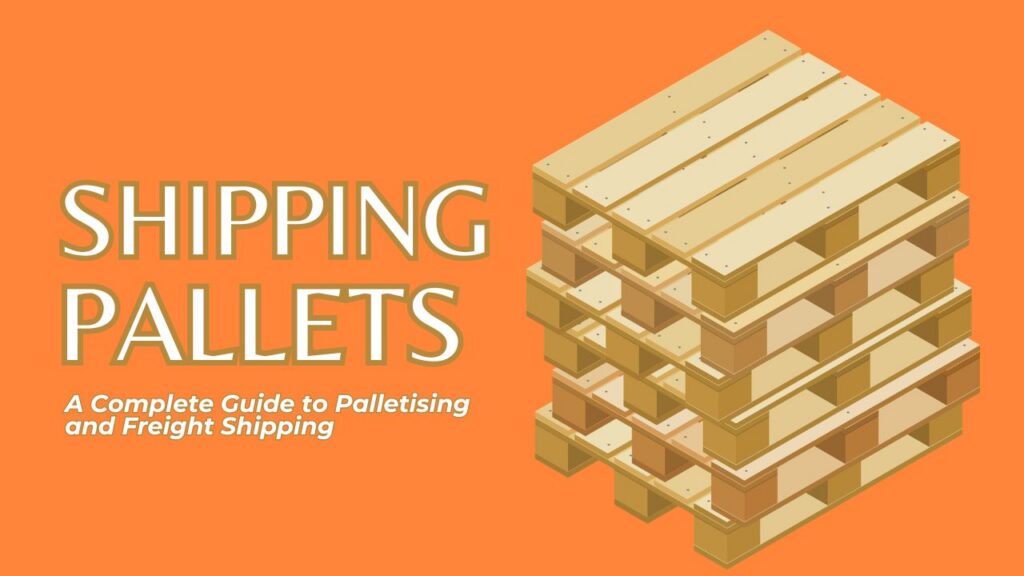
What Is a Shipping Pallet?
A shipping pallet is a flat structural platform that freight is stacked on, then wrapped and secured for transport. UPS defines it simply as “a platform upon which freight is stacked and wrapped for transportation,” built to let forklifts lift and move it easily, the starting point for everything else in this shipping pallets guide.
Pallets exist to consolidate freight. Instead of handling dozens of individual boxes, a carrier can move, stack, and store one palletised unit, speeding up loading, reducing handling damage, and making warehouse storage far more efficient than stacking loose cartons.
When Should You Ship on a Pallet?
Before anything else, this shipping pallets guide addresses the question that matters most: does the shipment actually need a pallet? Palletizing makes sense in a specific set of situations, not for every shipment that happens to be heavy or bulky:
- Heavy shipments: Freight that exceeds what a parcel carrier will accept, or that becomes cost-prohibitive to ship as individual parcels.
- Multiple cartons: Several boxes headed to the same destination consolidate more efficiently and more safely, as a single palletised unit.
- Bulk inventory: Large product quantities moving between warehouses or to a fulfilment centre.
- LTL freight: Shipments that don’t fill a full truckload but are too large for standard parcel service.
- Commercial shipments: Deliveries to a business address equipped to receive freight, such as a loading dock or forklift.
- Warehouse replenishment: Restocking runs that move inventory in volume rather than a handful of units at a time.
Not every heavy shipment needs a pallet, though. A single heavy box that a parcel carrier will still accept, or a shipment small enough to consolidate into one or two cartons, often ships more cheaply and simply without palletizing.
Types of Shipping Pallets
Material and size are the first practical decision covered in this shipping pallets guide. Pallets come in a few common materials, and the right choice depends on the shipment’s weight, destination, and reuse needs.
- Wood: The most common pallet material for domestic freight, generally the least expensive option. UPS notes that wooden pallets may require heat treatment depending on the destination, which matters for international shipments.
- Plastic: More durable and moisture-resistant than wood, often used for repeated trips, food-grade shipments, or export lanes with strict sanitation requirements.
- Specialty pallets: Built for specific loads, oversized freight, unusually heavy items, or products with non-standard footprints.
- Standard vs custom sizes: Pallet dimensions matter as much as material. In the US, the most common pallet is the 48-inch by 40-inch GMA pallet. PalletOne notes that this size accounts for roughly 30% of all pallets used in the country and can typically support several thousand pounds, though exact weight capacity varies by pallet grade and condition. Custom sizes exist for freight that doesn’t fit the standard footprint efficiently.
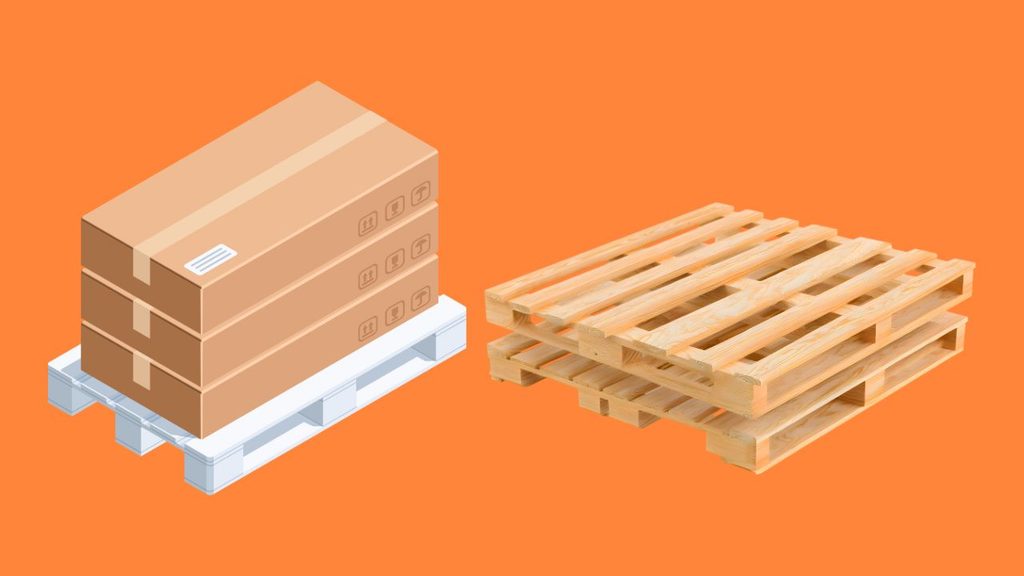
How to Prepare a Pallet for Shipping
The preparation steps below are central to this shipping pallets guide, since proper preparation keeps freight from arriving damaged, rejected, or reclassified at a higher cost. The process generally follows these steps:
- Choose the right pallet: Match the material and size to the shipment’s weight, destination, and any customer or carrier requirements.
- Inspect the pallet’s condition: Cracked boards, protruding nails, or a damaged base can compromise the whole load or get the shipment refused.
- Stack cartons correctly: Place heavier boxes on the bottom and lighter ones on top, arranged in a stable, interlocking pattern rather than a single unstable column.
- Avoid overhang: Boxes shouldn’t extend past the edges of the pallet; overhang increases the risk of damage and can violate carrier handling requirements.
- Distribute weight evenly: An unbalanced load is more likely to shift, tip, or damage the pallet during transit.
- Wrap and secure the load: Stretch wrap, strapping, or both, depending on the freight’s weight and shape.
- Attach labels clearly: Shipping labels, freight class information, and any handling instructions should be visible and not obstructed by wrap.
How to Wrap a Pallet for Shipping
Wrapping is what holds everything on the pallet together for the trip, and doing it well prevents most in-transit shifting:
- Stretch wrap: Apply several overlapping layers around the load, working from the bottom up to lock cartons to the pallet and to each other.
- Corner protection: Cardboard or plastic corner boards keep straps and stretch wrap from crushing box edges.
- Strapping: Adds extra security for heavier or taller loads, particularly when stacked cartons could shift under braking or turning.
- Top protection: A cap or sheet over the top layer keeps dust and moisture out and protects against stacking damage if another pallet is placed on top.
- Keep labels visible: Wrap around, not over, shipping labels and freight class markings so they stay scannable.
Pallets vs Parcels: Which Should You Use?
Moving freight by pallet and moving it by parcel solve different problems, a distinction this shipping pallets guide draws clearly, and the right one depends on the shipment’s size and volume. Knowing how to ship pallets well starts with recognizing when a pallet is the right call, rather than defaulting to it for anything heavy.
| Factor | Palletized Freight | Parcel Shipping |
|---|---|---|
| Shipment size | Large, bulky, or multi-carton loads | Individual boxes within carrier size/weight limits |
| Handling | Forklift or pallet jack required | Handled manually by a courier |
| Equipment | Loading dock or liftgate often needed | No special equipment needed |
| Typical use case | Bulk inventory, B2B freight, warehouse transfers | Individual customer orders, small business shipments |
| Tracking | Tracked at the shipment/freight-bill level | Tracked per individual package |
| Cost model | Priced by freight class, weight, and density | Priced primarily by weight and dimensional weight |
How Much Does It Cost to Ship a Pallet?
Shipping pallet costs are the part of this shipping pallets guide most businesses care about, and they depend on several factors working together rather than a single flat rate:
- Weight: Pallet weight generally drives cost upward, though density relative to size also matters.
- Dimensions: A pallet’s height and footprint affect how much trailer space it occupies.
- Origin and destination: Longer distances and less-serviced lanes typically cost more.
- Freight class: The NMFC system rates freight from class 50 to 500 based on density, handling, stowability, and liability. Denser, easier-to-handle freight is generally cheaper to ship than bulky or fragile freight.
- Number of pallets: Shipping multiple pallets together can sometimes lower the per-pallet rate.
- Accessorial services: Extras like inside delivery, appointment scheduling, or limited-access locations add fees.
- Residential delivery or liftgate service: A liftgate is often required when the receiving location doesn’t have a loading dock, and this typically adds an accessorial charge.
- Fuel surcharge: Freight rates commonly include a variable surcharge tied to current fuel prices.
LTL Pallet Shipping Explained
LTL is an important part of pallet shipping because it is commonly used for shipments that are too large for parcel service but do not require a full truckload. LTL, or less-than-truckload, freight is a ground shipping option sometimes called pallet freight when it’s palletised rather than shipped as loose cartons. It makes sense whenever a business has one or a handful of pallets to move, rather than enough freight to fill an entire trailer.
Because multiple customers’ freight rides in the same trailer, freight class plays a direct role in LTL pricing; it’s the standardised system carriers use to price shipments consistently across the industry. Pickup and delivery are typically scheduled rather than on-demand, and commercial addresses with a loading dock or forklift generally see faster, cheaper handling than residential deliveries, which often require additional accessorial services.
Palletized Freight in Ecommerce and Inventory Replenishment
Palletized freight shows up in an ecommerce supply chain in a few key places. For most sellers, it appears at a few specific points:
- Manufacturer to fulfilment centre: Finished goods moving from a factory to the warehouse that will eventually pick and pack individual orders.
- China to US warehouse: Bulk international shipments, often palletized for the ocean or air freight leg before customs clearance.
- Warehouse to warehouse: Redistributing inventory across multiple fulfilment locations to shorten last-mile delivery distances.
- B2B fulfilment: Business-to-business orders are typically shipped in bulk rather than as individual parcels, which is part of why B2B freight leans heavily on pallets.
- Bulk inventory movement: Restocking a fulfilment centre ahead of a sales push or peak season.
Handling this kind of freight consistently is one reason some ecommerce sellers work with a 3PL rather than coordinating pallet shipments themselves. NextSmartShip’s 3PL fulfilment service covers receiving and storing bulk inventory across its warehouse network, infrastructure that makes palletised inbound shipments practical to manage at scale.

The Bottom Line
Shipping freight on a pallet, at its core, comes down to a few fundamentals: know when a pallet is actually the right call, prepare and wrap the load correctly, and understand the factors that drive the quote before requesting one. Get those right, and the more detailed sections earlier in this shipping pallets guide- freight class, LTL, accessorials- become details to manage rather than surprises to react to.
Frequently Asked Questions
The questions below close out this shipping pallets guide with quick answers to the most common questions.
A shipping pallet is a flat platform, typically made of wood or plastic, that freight is stacked on and secured to for transport. It allows forklifts and pallet jacks to move consolidated freight efficiently instead of handling individual boxes.
Choose a pallet suited to the load, inspect it for damage, stack cartons in a stable pattern without overhang, distribute weight evenly, wrap and strap the load securely, and attach clear shipping labels and freight class information.
Cost depends on weight, dimensions, distance, freight class, the number of pallets shipped, and any accessory services like liftgate or residential delivery. There’s no single flat rate; a freight quote accounts for all of these together.
The most common pallet size in the US is 48 inches by 40 inches, known as the GMA pallet. Custom sizes are also used for freight that doesn’t fit that standard footprint efficiently.
Pallet weight capacity varies by material, grade, and condition. Still, a standard GMA pallet can typically support a substantial load, often cited at several thousand pounds for a new, undamaged pallet. Always check the specific pallet’s rated capacity rather than assuming a universal number.
Yes. Stretch wrap, strapping, or both keep cartons secured to the pallet and to each other, preventing shifting, tipping, or damage during transit and handling.
LTL describes a shipping method: freight sharing trailer space with other shipments rather than filling a full truckload. Palletizing freight describes how the load is physically consolidated. Most LTL freight moves on pallets, but palletizing is also used across other freight methods, including full truckload.
Yes. A 3PL that handles warehousing and freight receiving can manage palletised inbound shipments, coordinating deliveries, storing bulk inventory, and preparing it for pick-and-pack fulfilment as individual orders come in.