


Discreet shipping means sending an order in a package that doesn’t announce what’s inside or who sent it. The outer box is plain, the label carries only what the carrier needs, and any branding stays out of sight. It’s a packaging approach, not a special carrier service, and it doesn’t make a shipment untraceable or exempt from carrier rules.
This guide explains how it works, why shoppers and merchants use it, what it costs, and how an online store can offer it without overpromising.
What Is Discreet Shipping?
Discreet shipping is packing and labelling an order so the outside reveals as little as possible about its contents or the seller. Shopify describes the goal as keeping the packaging plain and unremarkable, so a delivery driver, neighbour, or roommate can’t tell what’s in the box.
Three terms get mixed up, and the differences matter:
- Plain or nondescript packaging. Unmarked boxes and envelopes with no logo or product name.
- Generic packaging. Standardised packaging with a general label or carrier branding, the kind a store selling thousands of product types might use.
- Anonymous shipping. The idea that nobody can identify the sender. Carriers generally require sender and recipient information, so discreet shipping doesn’t deliver this on its own.
UPS’s published terms, for example, require the shipper’s name and address and the recipient’s name and address on each package label. Customs paperwork and carrier tracking require additional details for international orders. Discreet shipping reduces what a passerby can read off the box. It doesn’t erase the record that the carrier keeps.
How Does Discreet Shipping Work?
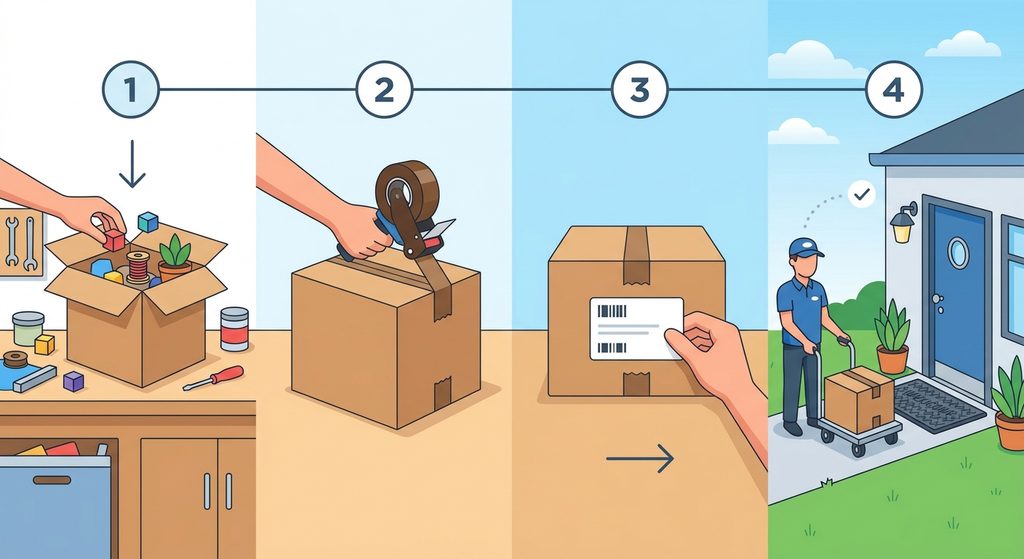
How does discreet shipping work in practice? It’s a series of small decisions about the box, the label, and what’s inside. None of them requires a special carrier product.
Plain or Unbranded Outer Packaging
The outer layer is a plain brown box or an unmarked mailer. Unmarked shipping boxes are sold by shipping supply stores, packaging suppliers, and carriers. Shopify lists plain boxes, unmarked mailers and envelopes, and minimal labelling as the basic materials. A standard cardboard carton blends in on a porch because it looks like every other delivery.
Generic Packaging and Product Protection
Plain shipping packaging still has to protect the product. Generic shipping packaging, such as standardised carrier boxes, works the same way. The outer carton can be unmarked, while the retail box inside carries full branding, keeping both privacy and product presentation intact.
Shipping Labels and Sender Information
Discreet shipping labels keep the required details and drop the optional ones. Shopify advises keeping labels minimal, with only essential information and no extra branding or hints about the contents. Keep the sender and recipient details the carrier requires on the label.
Return information must be accurate and deliverable. Use a real sender name and an address the carrier can reach, and follow the selected carrier’s requirements. A made-up or incomplete address can cause failed returns, undeliverable packages, or compliance problems. The privacy comes from the plain box and the absence of logos, not from altering the label.
Tracking and Delivery Notifications
Discreet doesn’t mean untracked. Tracking numbers, delivery emails, and signature options all still work. Customer privacy in ecommerce extends past the box. Tracking emails can reveal the seller’s name or an order summary, so check what your customers receive, not just what appears on the box.
Why Do People Use Discreet Shipping?
Privacy-Sensitive Purchases
Some products are private by nature, including adult products, intimate health and beauty items, and medical supplies. Plain outer packaging means a neighbour who handles a misdelivered box learns nothing from it. Shopify’s guidance also reminds merchants that discreet packaging never changes the rules for restricted items, age-gated products, or customs declarations.
Gifts and Surprise Deliveries
Anyone ordering a gift for someone in the same household knows the problem: a branded box on the porch spoils the surprise. Plain exterior packaging keeps the contents a secret until it’s opened.
High-Value Products
A jeweller’s logo or a recognisable electronics box can signal valuable contents. Plain packaging removes some of those visual cues. It doesn’t guarantee the package won’t be stolen, because thieves can target any parcel, and it shouldn’t be marketed as theft prevention. For private package delivery with more control, pair it with signature confirmation or secure delivery options for high-value items.
Brand and Customer Preferences
Some customers simply prefer a low-profile delivery.
How to Package Orders Discreetly
Here is a practical sequence for how to ship packages discreetly:
- Choose a plain outer box or mailer sized to the product.
- Remove promotional or product-identifying marks from the exterior, including stickers, logo tape, and printed product names.
- Protect the item with internal packaging suited to its fragility.
- Keep the label accurate. Include the required sender, recipient, and any customs or carrier information.
- Inspect the finished package for visible logos, product names, or barcodes that reveal what’s inside.
- Confirm carrier requirements for the service and destination before shipping.
- Tell the customer what to expect, including any limitations on privacy.
Discreet Shipping vs. Regular and Branded Shipping
Discreet Shipping
The branded packaging vs. plain packaging choice is really about where the brand shows up. Discreet shipping prioritises a less revealing exterior. Branding moves inside the box or disappears.
Standard Shipping
Standard shipping uses ordinary packaging and carrier labelling with no particular privacy goal. The box might carry a store’s name, a product description, or a retail logo, simply because nobody removed it.
Branded Shipping
Branded shipping makes the retailer’s identity the point. The outer box is part of the marketing and the unboxing experience.
Hybrid Packaging
Hybrid packaging splits the difference: a plain exterior with a branded box or inserts inside. It’s the most common compromise for stores that care about both privacy and presentation. The most common version is a branded box inside a plain brown outer box.
Does Discreet Shipping Cost More?
It depends. Discreet shipping is a packaging choice rather than a standardised carrier product, so there isn’t a single price.
Packaging Material Costs
Plain stock boxes and unmarked mailers are often cheaper than custom-printed packaging because they don’t require design or a print run. Shopify makes this point about generic materials, noting faster turnaround and easier availability. If you also keep branded inner packaging, you pay for both layers.
Package Dimensions and Weight
Postage depends on weight and size, not on how plain the box looks. A bigger outer carton that holds a branded inner box adds weight and volume, which can raise the carrier’s charge.
Custom Packaging and Fulfilment Labour
Handling a subset of orders differently takes labour. Warehouse staff need to recognise discreet orders, pick the right box, and avoid adding standard inserts. That extra step costs time, particularly when discreet orders share a line with branded ones.
Carrier Charges
The carrier doesn’t add a discreet shipping fee on its own. Some privacy-focused options, such as signature on delivery, carry separate charges.
How Ecommerce Businesses Can Offer Discreet Shipping
Discreet shipping for online stores works best as a defined process, not an improvised exception. Discreet packaging for ecommerce also needs one owner who maintains the rules.
Decide Which Orders Need Plain Packaging
Some stores make it the default for sensitive product categories. Others offer it as a checkout option or a response to customer requests. Decide the rule before orders arrive.
Establish Packaging Standards
Write down the approved boxes, mailers, inserts, labels, and protective materials. Specify what must never appear on the exterior, such as logos, product names, and promotional tape.
Configure Order-Packing Instructions
Staff can’t follow a rule they don’t see. Flag discreet orders in your order system so the packing instructions appear at the station, and make sure branded inserts are excluded when they would undermine the privacy goal.
Communicate Clearly With Customers
Describe the policy in plain terms at checkout and in support pages. Shopify recommends explaining what you offer and whether it costs more before purchase, and confirming tracking details afterwards. State the limits too: the label still shows required information, and the carrier keeps shipment records.
Review Quality and Costs
Check damage rates, shipping costs, and customer feedback.
Discreet Shipping and Third-Party Logistics
A third-party logistics provider (3PL) can handle storage, picking, packing, and shipment preparation, where much discreet order fulfilment happens.
Before you commit, ask a 3PL:
- Does it support plain or custom packaging?
- Can it follow order-specific instructions?
- Are separate packaging or handling fees charged?
- Can it place branded inner packaging inside a plain outer box?
- Does its setup stay compatible with carrier and customs requirements?
Packaging rules apply at the pick-and-pack stage, order by order. NextSmartShip offers custom packaging based on product dimensions and accepts branded packaging materials sent to its fulfilment centre, so it’s worth raising a plain outer box with a branded inner box with its team. If you have a specific privacy requirement, such as unmarked outer packaging, confirm it with NextSmartShip before you commit. Its guide to e-commerce packaging solutions covers box and mailer options.
Common Discreet Shipping Mistakes
- Assuming plain packaging guarantees anonymity. Labels, tracking, and carrier records still exist.
- Removing required information. Missing, incomplete, or made-up sender or recipient details can delay or return a package; for example, UPS’s terms require them on the label.
- Using packaging that doesn’t protect the product. A plain box that crushes in transit is a failed shipment.
- Letting branded inserts defeat the goal. A catalogue or invoice visible through a window can reveal the seller.
- Promising that nobody can identify the sender or contents. Carriers can open and inspect shipments. UPS’s terms reserve that right.
- Not explaining limits to customers. Overpromising creates disputes.
Discreet Shipping Packaging Options Compared
| Packaging approach | Exterior appearance | Branding visibility | Main consideration |
|---|---|---|---|
| Plain packaging | Unbranded or minimally marked | Low | Protect the item and keep required shipping details |
| Generic packaging | Standardised, not product-specific | Low to moderate | Avoid revealing the product |
| Branded packaging | Shows the retailer’s branding | High | Supports recognition and unboxing |
| Branded inner box with plain outer box | Plain exterior, branded interior | Low externally | Balances privacy and brand experience |
None of these guarantees anonymity or prevents theft.

Frequently Asked Questions
It means shipping an order in plain or generic packaging with minimal labelling, so the outside doesn’t reveal the contents or the seller. It’s a packaging approach, not a standard carrier service.
No. Carriers need accurate sender and recipient details. UPS’s terms, for example, call for the shipper’s name and address on the label. A merchant can leave off logos and extra branding, but the sender name and return address must be accurate, deliverable, and meet the carrier’s requirements.
Carriers can inspect packages. UPS’s terms reserve the right to open and inspect any shipment, though it isn’t required to. Plain packaging only limits what other people see from the outside.
Not as a dedicated program. Shopify notes that USPS has no specific discreet shipping program, and that UPS and FedEx don’t either, but all three can carry plain, minimally labelled boxes. The privacy comes from how the shipper packs and labels the order.
Not necessarily. Plain stock packaging can cost less than custom branding, but a larger outer box, extra labour, or services like signature on delivery can add cost. It varies by store and order.
No. Discreet shipping limits what’s visible on the package. Anonymous shipping would hide the sender entirely, which carrier labelling and customs rules don’t generally allow.
Many can, if their process supports plain or custom packaging and order-specific instructions. Ask about fees, branded inner packaging, and carrier compatibility before relying on it.
No. Plain packaging removes visual cues about valuable contents, but it doesn’t stop theft. Signature confirmation or secure delivery options add more protection.