


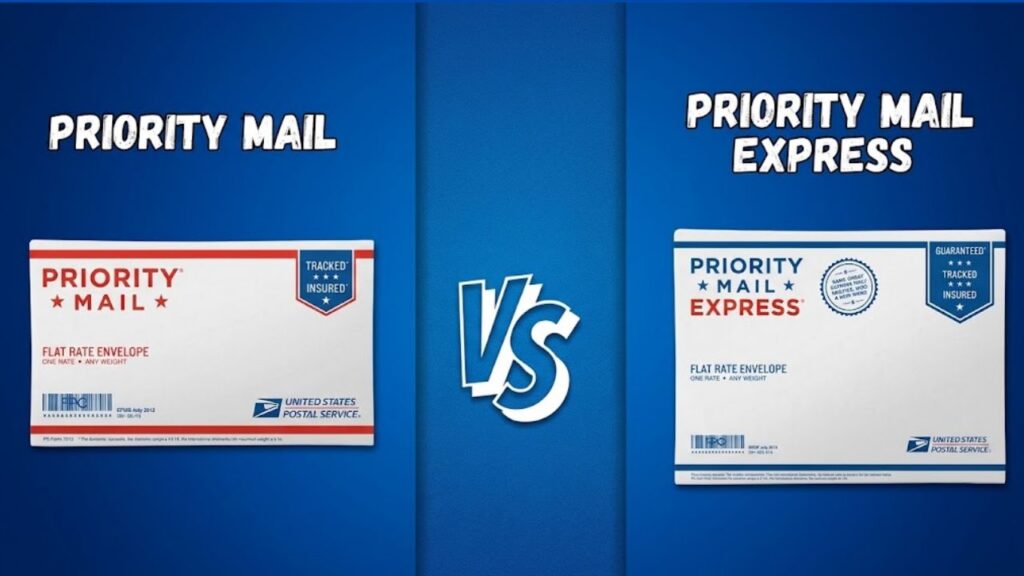
Spend five minutes at a post office counter, and you’ll watch someone squinting at two identical cardboard boxes, trying to figure out why one costs twice as much. Priority Mail and Priority Mail Express get mixed up constantly. The gap between them is way bigger than the labels let on.
Here’s the short version: both move a package fast. Only one of them actually promises it will arrive on time. That single word, guarantee, is really where this whole comparison lives. Everything else, including the pricing, weight limits, and extra perks, kind of branches off from that one distinction. This guide walks through how USPS Priority Mail vs. Priority Mail Express stacks up on speed, cost, and the situations where each one is actually the right call.
What Is USPS Priority Mail?
Priority Mail is usually the default pick once First-Class starts feeling too slow but overnight seems like overkill. Before deciding whether it fits your shipment, it helps to know exactly what you’re getting for the price.
The Basics
Priority Mail is the USPS domestic shipping service most people default to when First-Class Mail feels too slow, but overnight delivery is just overkill. It typically moves a box across the country in one to three business days. Plus, you get tracking and a baseline chunk of insurance right out of the box.
It is the absolute workhorse of the lineup. Everyone uses it, from small-time Etsy sellers to big retail brands sending out return labels. Honestly, there is way more bundled into that price than most folks realize.
What’s Included
Every Priority Mail shipment includes USPS Tracking at no extra charge, along with some built-in insurance coverage depending on the mail class and packaging used. Flat Rate boxes and envelopes let a shipper pay one price regardless of weight, as long as the item fits and stays under 70 pounds. Saturday delivery is included at no additional cost, too, which is one advantage Priority Mail holds over some ground services people assume are faster. Now, the part that trips a lot of people up.
The Catch: No Guarantee
Priority Mail does not come with an official delivery guarantee. The one- to three day window is a service target, not a promise. If a package shows up on day four, technically it’s late, but there’s no refund process built around that delay the way there is with Express. For most everyday shipments, that’s a fine tradeoff given the lower price. For anything genuinely time-critical, though, it’s a real limitation worth keeping in mind.
What Is USPS Priority Mail Express?
This is the tier that exists specifically to fix that gap. It costs a lot more, but it backs that cost up with a promise Priority Mail just doesn’t make.
The Basics
Priority Mail Express is the fastest domestic service USPS offers, and it’s the only one that comes with an actual money-back guarantee. According to the official USPS Priority Mail Express service page, delivery is provided by 6 PM with a money-back guarantee, seven days a week, all year, with only limited exceptions, to most addresses and PO Boxes nationwide.
That guarantee is really the entire reason the service exists. Miss the committed window, and the shipper is eligible for a full refund on postage. No other domestic USPS product works that way.
It’s also not some new premium tier someone dreamed up recently. It’s been around a while.
Where the Service Came From
Priority Mail Express isn’t a new invention. Postal history records from Mystic Stamp Company trace the service back to 1970, when USPS began experimenting with an overnight delivery product, which became a permanent class of mail by 1977 under the name Express Mail. It later took on the Priority Mail Express name to align it with the broader Priority Mail brand, but the underlying promise- guaranteed speed- has stayed basically the same for roughly five decades now.
A few other perks come bundled in alongside that speed guarantee.
What’s Included
Priority Mail Express ships packages up to 70 pounds and includes USPS Tracking along with up to $100 of insurance on most shipments. Sunday and holiday delivery is available in many major markets for an added fee, something Priority Mail doesn’t offer in any structured way. Free package pickup comes included as well, which matters more than people expect if you’re shipping in volume and don’t want to make a post office run every day.
Priority Mail Delivery Time and Speed
Priority mail delivery time typically falls somewhere between one and three business days, depending on the origin and destination zones. Shipments within the same region usually land on the shorter end. Cross-country packages tend to creep closer to three days.
Priority Mail Express works a bit differently, committing to a specific window rather than a loose range. USPS tweaked its service standards back in 2025. Now, the delivery window for Express is generally one to three days by 6 PM, though plenty of routes still hit overnight or two-day delivery depending on how far the box is going.
Honestly, the exact delivery timeline isn’t even the main takeaway here. When weighing standard vs. expedited shipping, what actually matters is that Express slaps a solid guarantee behind that window. Priority Mail? Not so much
Priority Mail Express Cost vs. Priority Mail Pricing
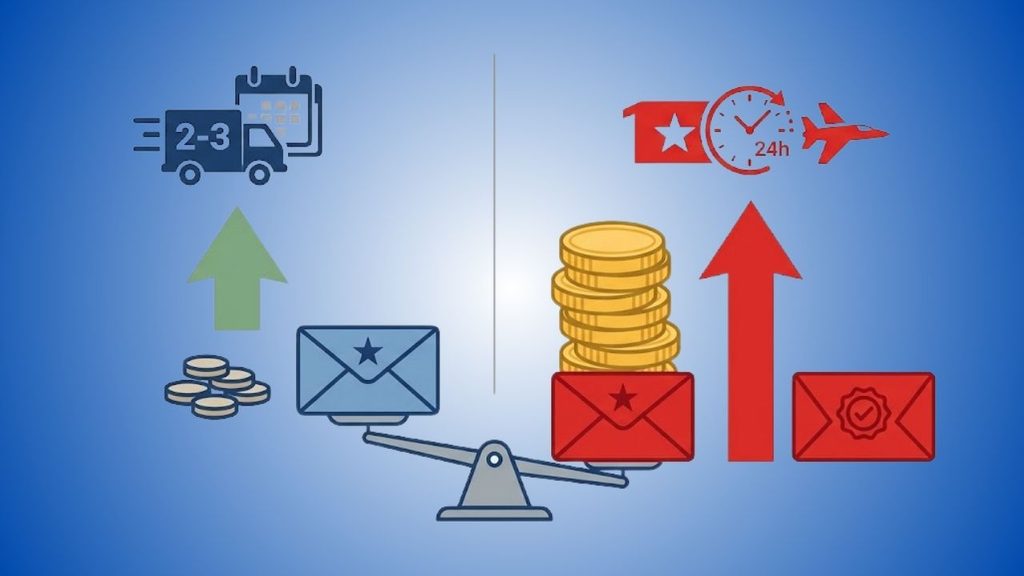
This is usually where the actual decision gets made. Priority Mail Express cost sits well above standard Priority Mail, and it’s not a small gap either.
Retail Priority Mail pricing starts around $10 for the smallest options, while Priority Mail Express starts around $35.65 at a Post Office counter, according to USPS’s own pricing page. Online and commercial rates through USPS or third-party postage platforms bring both prices down, sometimes by quite a bit, but the ratio between the two stays roughly the same regardless. Express typically runs three to five times the cost of standard Priority Mail, for a delivery window that might only be a day or two shorter in practice.
That price gap is exactly why Express usually gets reserved for situations where the date matters more than the money does. Think a legal filing deadline, a medical sample, a replacement part holding up a repair somewhere. Priority Mail handles the other 90 percent of shipping needs, and does it for a fraction of the cost.
Side-by-Side Comparison
| Feature | Priority Mail | Priority Mail Express |
| Delivery time | 1 to 3 business days | 1 to 3 days by 6 PM (often overnight to 2 days) |
| USPS money-back guarantee | No | No |
| Starting retail price | Around $10 | Around $35.65 |
| Weight limit | Up to 70 lbs | Up to 70 lbs |
| Insurance included | Limited, varies by packaging | Up to $100 on most shipments |
| Tracking | Included | Included, more frequent scans |
| Saturday delivery | Included at no cost | Included |
| Sunday/holiday delivery | Not offered | Available in many markets for a fee |
| Best for | Everyday packages, ecommerce orders | Time-critical or deadline-driven shipments |
When to Choose Priority Mail
For most shipments, where speed matters but a specific date isn’t a dealbreaker, Priority Mail is the obvious pick. That covers things like:
⦁ E-commerce orders and general retail shipping
⦁ Return labels and exchanges
⦁ Documents that need to move quickly but aren’t tied to a legal deadline
⦁ Businesses trying to balance speed against shipping costs at scale
For most senders, the one- to three-day window is fast enough on its own, and the lack of a formal guarantee rarely turns into a real problem in day-to-day use.
When to Choose Priority Mail Express
Priority Mail Express earns its higher price in a narrower set of situations, usually when a missed delivery date would create a real, tangible problem. That includes things like:
⦁ Legal documents with a filing deadline
⦁ Time-sensitive medical samples or prescriptions
⦁ Contracts or bids that have to arrive by a specific date
⦁ High-value replacement parts holding up a repair or business operation
⦁ Any shipment where the sender wants the money-back guarantee as a backup plan
If a package absolutely has to arrive by a certain day, and missing that date would cost more than the extra postage, Express is really the only USPS domestic option built to back that promise up.

Frequently Asked Questions
Here are some FAQs to help you out:
The core difference between Priority Mail and Priority Mail Express comes down to the guarantee. Priority Mail delivers in roughly one to three business days with no formal guarantee, while Priority Mail Express includes a USPS money-back guarantee if the committed delivery window is missed.
Priority Mail Express cost typically starts around $35.65 at retail counters, compared to roughly $10 for the smallest Priority Mail options. Online and commercial rates for both services are usually lower than retail counter pricing.
Yes. Priority Mail includes USPS Tracking at no extra cost and a baseline level of insurance depending on the packaging used. Priority Mail Express includes tracking as well, plus up to $100 of insurance on most shipments.
Not always. Plenty of routes still deliver overnight or within two days, but the official commitment covers up to three days by 6 PM, depending on origin and destination, following USPS service standard updates in 2025. The delivery stays backed by a money-back guarantee regardless of which window applies.
No. Priority Mail doesn’t carry a delivery guarantee, so there’s no refund process tied to a late arrival. Priority Mail Express is the only domestic USPS service with that protection built in.
USPS transit times depend heavily on distance across nine postal zones. Priority Mail sent locally (Zones 1–2) often arrives in 1 to 2 business days, while cross-country deliveries (Zones 7–8) typically take the full 3 days. Priority Mail Express routes in major metro corridors usually hit next-day delivery, whereas rural or remote destination zones default to a 2-day commitment.
Yes, both services deliver to Alaska, Hawaii, Puerto Rico, and APO/FPO/DPO military addresses. However, Priority Mail transit windows can stretch past 3 business days for these non-contiguous areas. Priority Mail Express still services them, but guaranteed commitment windows often extend to 2–3 days, and certain remote bases may be exempt from the money-back guarantee.
Most online merchants optimize their ecommerce fulfillment strategy with standard Priority Mail for day-to-day orders because of the lower cost and reliable one- to three-day window. Priority Mail Express usually gets reserved for expedited orders or situations where a customer specifically needs guaranteed delivery.
Final Thoughts
Priority Mail and Priority Mail Express are really solving two different problems, even though they look pretty similar sitting next to each other. Priority Mail covers fast, affordable shipping for the vast majority of packages out there. Priority Mail Express exists for the handful of moments when missing a delivery date just isn’t an option. Once the guarantee becomes the deciding factor instead of the speed itself, picking between the two gets a lot easier.